

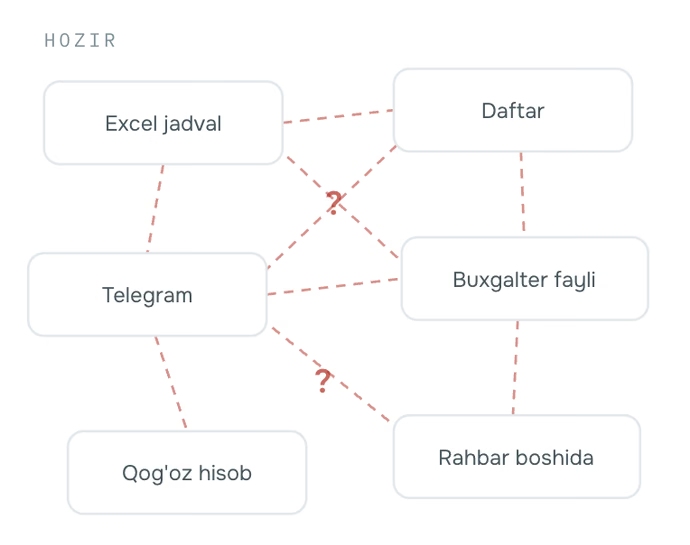
You have 10 programs and fully trust the numbers in none of them
Every department has its own program, with Google Sheets on top. Ask for a number and you get three different answers.
YOU WILL GET THE WHOLE PICTURE IN 4 MINUTES
When Odoo is the right call, what it actually looks like and how you would use it — this page answers all three
What it costs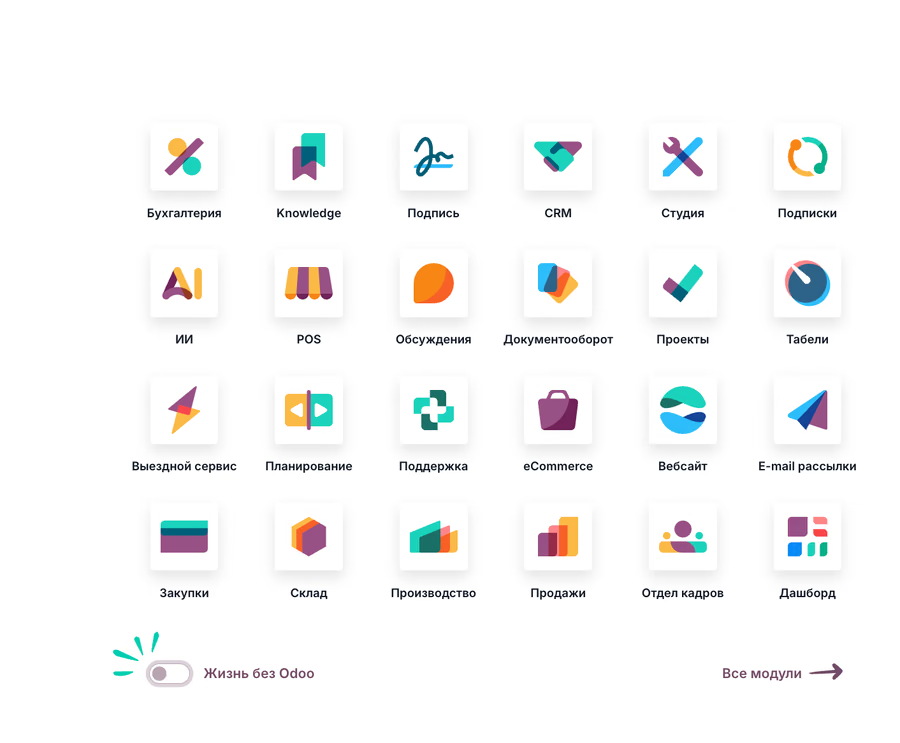
Every department has its own program, with Google Sheets on top. Ask for a number and you get three different answers.
The answer depends on the order inside, not on the market. If the first branch has no clear order and system, the second one certainly will not
You have a team, but decisions only come from you. A holiday stops the business, and so does a cold.

The way the work is done is in people's heads, not on paper. When a person leaves, the knowledge leaves with them.
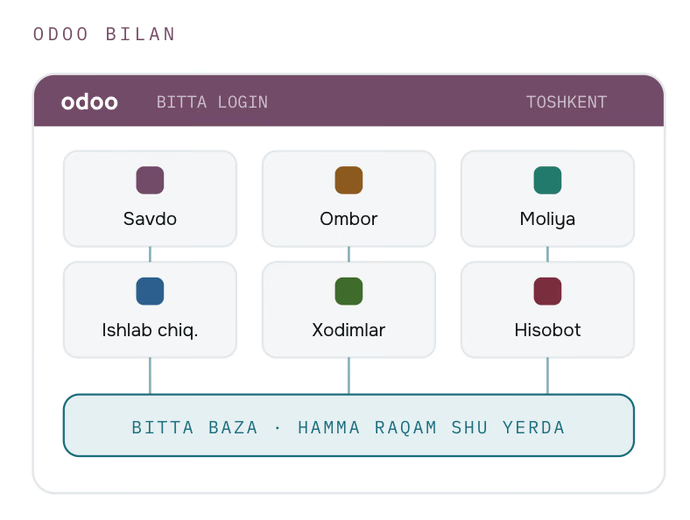
Every icon is a piece of your business: sales, inventory, accounting, people. They are no longer separate — they are in one window
An order goes in: stock drops, the invoice is ready, the report updates. You enter it once — the system does the rest
You switch on only the departments you need. As the business grows you add more. You never change the system
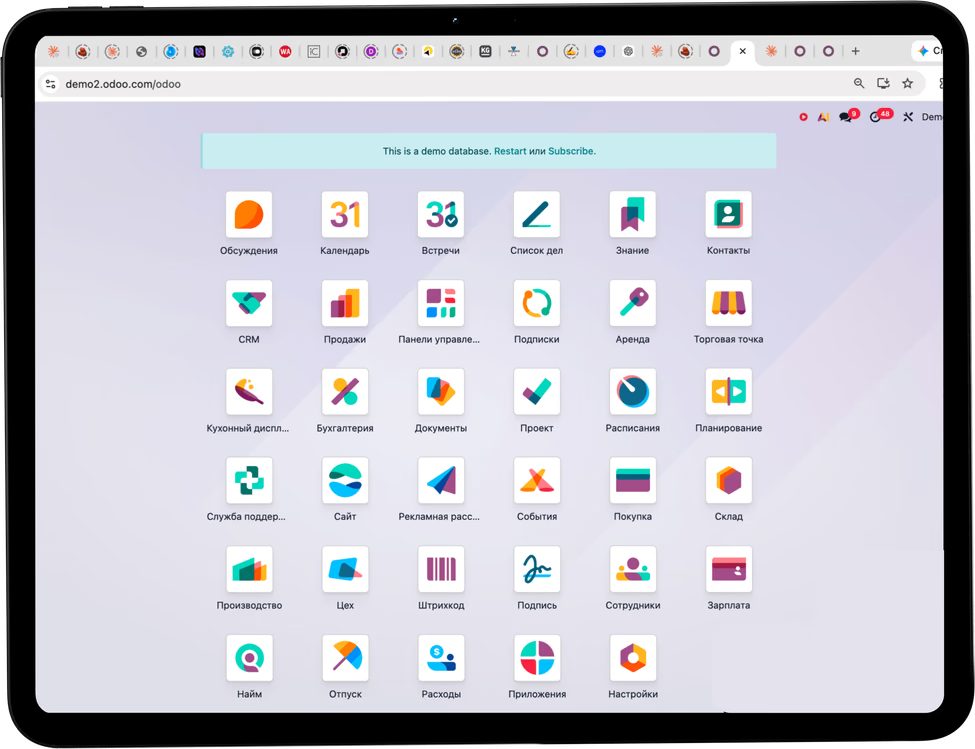
Odoo is a program that runs the daily work of a business in one place. Sales, inventory, purchasing, manufacturing, accounting, people — each of these is a separate department inside Odoo. They all work off one shared database. So a record entered in one place shows up everywhere else on its own: no passing files around, no export-import, no “send me the new spreadsheet”.
Odoo is not one big program. It is several programs living under one roof. If today you only need sales and inventory, you switch those two on and leave the rest off. If manufacturing joins next year, you switch that department on; the old data stays where it is and nothing has to be rebuilt.
On the official Odoo site these departments are grouped into categories: sales, finance, inventory and manufacturing, human resources, marketing, services, website, productivity. There are more than fifty of them — CRM, Sales, Point of Sale, Inventory, Purchase, Manufacturing, Quality, Projects, Employees, Accounting, Sign and so on.
It depends on the size of the business and how many departments are covered. The work runs in eight stages and each one has a defined result — we do not move on until that result is there. In the final stage we watch the system run for 2–4 weeks. We will give you the exact timeline for your business after the first conversation.
The price follows the scope: how many processes are put in order, which modules are switched on, how much data is migrated. That is why we start with a free audit and put the scope on paper — the exact figure comes with it. Nothing starts until you approve it.
No. We migrate the data from your old system and check that it came across correctly. Odoo is modular: today we switch on only the departments you need, and the rest can be added later. Nothing has to be rebuilt from scratch.
That is the most common situation. This is why we train the team by role and leave each person a short handbook — a new hire settles in within 2–4 days. Who answers for which number is decided in advance, so the system rests on the process rather than on one person.
Every stage leaves a document behind: the diagnostic report, the configuration document, the standards handbook, the dashboards and the responsibility matrix. Before we hand over the keys we make sure your team can run it without us. Further development is a separate agreement.
Yes — the owner has to be involved. We do not take on projects where the owner wants to stand aside, because the decisions come back to you anyway. What we need from you is not daily work but a decision at the end of each stage. That is exactly why we never run more than 5 projects at once.
We will call you back within 24 hours. Your number is never passed on
We will call you back within 24 hours. Your number is never passed on
Come and see us at the office:
Tashkent, Yunusabad district, Qashqar massiv, 17.